Updated November 2026
What size portable power station do I need?
You need to check two numbers: capacity in watt‑hours (Wh), which decides how long things run, and output in watts (W), which decides what you can plug in at all. Get both right and any station on this site will do the job.
Step 1: list what you want to power
Use the label on each device, or these typical figures. For devices that cycle on and off, like fridges, use the average.
| Device | Typical watts |
|---|---|
| Phone charging | 10 W |
| LED light bulb | 10 W |
| Wi‑Fi router + modem | 20 W |
| CPAP machine | 40 W |
| 12 V cooler | 50 W |
| Fridge (average draw) | 60 W |
| Laptop | 60 W |
| 55" TV | 100 W |
| Microwave (700 W model) | 1,000 W |
| Drip coffee maker | 1,000 W |
| Space heater | 1,500 W |
Step 2: check the watts
Add up everything you will run at the same time. The station’s continuous output must be higher than that total. A coffee maker or space heater alone rules out anything under about 1,500 W, while phones, laptops, routers and CPAPs run on almost anything.
Step 3: calculate the watt‑hours
For each device, multiply its watts by the hours you need it, add the results, then add 15% for inverter losses. That is the minimum capacity to look for.
Example for an overnight outage: fridge 56 W × 12 h = 672 Wh, router 20 W × 12 h = 240 Wh, phones and lights about 100 Wh. Total 1,012 Wh, plus 15% ≈ 1,160 Wh. A 1 kWh station falls short, so this home should look at about 1.2 kWh or more, and a 2 kWh unit gives comfortable margin.
Quick guide by use
Day trips, phones, cameras and laptops: 250–500 Wh. Weekend camping with a 12 V cooler or CPAP: 500–1,000 Wh. Overnight home backup for a fridge, router and CPAP: 1,000–2,000 Wh. Multi‑day outages, well pumps or 240 V appliances: 3 kWh and up, ideally expandable.
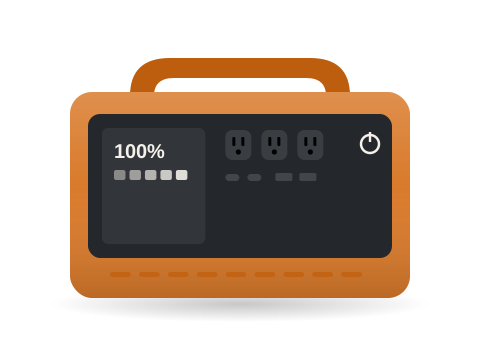
500 Wh class
Jackery Explorer 500 v2
Camping, CPAP without humidifier, mini‑fridge.
512 Wh · 500 W · 80 min
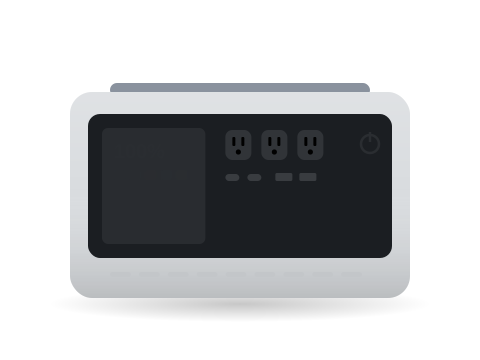
1 kWh class
DJI Power 1000 V2
One night of home backup, with the most output in its class.
1,024 Wh · 2,600 W · 56 min
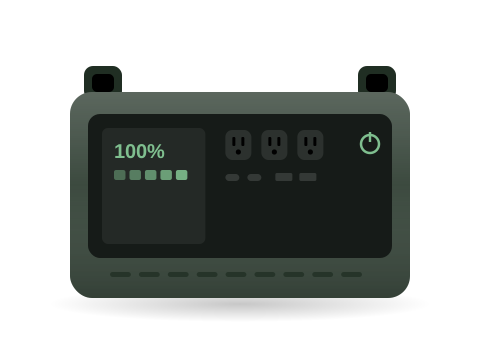
2 kWh class
BLUETTI Elite 200 V2
A full day for essentials, and fast solar refills.
2,074 Wh · 2,600 W · 60 min
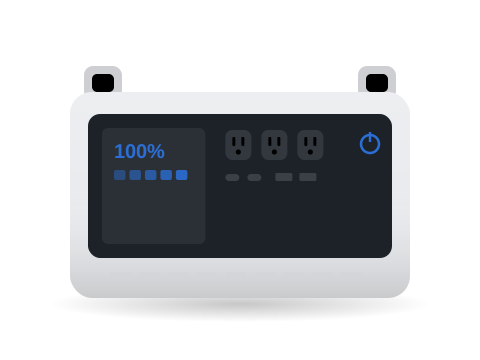
3 kWh and up
Anker SOLIX F3000
Multi‑day outages and RVs, expandable to 24 kWh.
3,072 Wh · 3,600 W · 115 min
Frequently asked questions
Is it better to buy bigger than I need?
A little, yes. Batteries lose some capacity over the years and real‑world efficiency is lower than the label, so 20–30% of headroom is sensible. Expandable models let you start smaller.
Why do I get fewer Wh than the label says?
Converting battery power to 120 V AC loses about 10–20% as heat. Charging through USB or the 12 V socket loses less.
Sources: BKV Energy · RetirementLiving