Updated · November 2026
Best portable power station for home backup in 2026
A 1 kWh LiFePO4 power station is the sweet spot for most homes: enough to keep a fridge, router, phones and a CPAP going through a typical overnight outage, light enough to move between rooms, and quiet enough to run indoors.
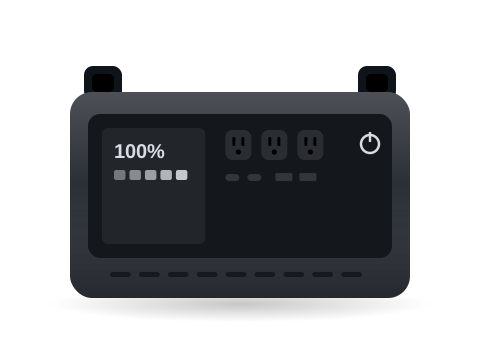
Best overall
EcoFlow DELTA 3 Plus
Six AC outlets, an 8 ms UPS and room to grow to 5 kWh make it the safest long‑term buy.
1,024 Wh · 1,800 W · 56 min · 500 W solar
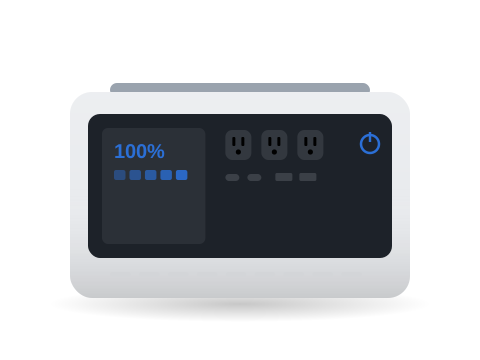
Best for high‑draw appliances
Anker SOLIX C1000 Gen 2
2,000 W continuous runs a microwave or coffee maker, and it refills in 49 minutes between outages.
1,024 Wh · 2,000 W · 49 min · 600 W solar
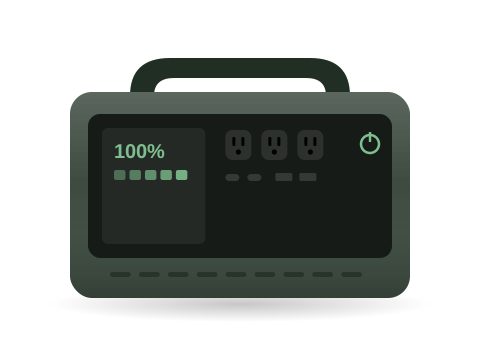
Best with solar panels
BLUETTI Elite 100 V2
1,000 W of solar input means a multi‑day outage is manageable if you have panels.
1,024 Wh · 1,800 W · 70 min · 1,000 W solar
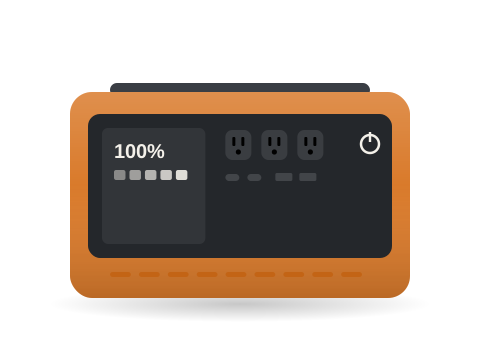
Best for simplicity
Jackery Explorer 1000 v2
The lightest and most capacity of the group, with near‑silent charging for bedrooms.
1,070 Wh · 1,500 W · 60 min · 400 W solar
Comparison table
| EcoFlow DELTA 3 Plus | Anker SOLIX C1000 Gen 2 | BLUETTI Elite 100 V2 | Jackery Explorer 1000 v2 | |
|---|---|---|---|---|
| Capacity | 1,024 Wh | 1,024 Wh | 1,024 Wh | 1,070 Wh |
| Continuous AC output | 1,800 W | 2,000 W | 1,800 W | 1,500 W |
| AC recharge time | 56 min | 49 min | 1 h 10 min | 1 h |
| Max solar input | 500 W | 600 W | 1,000 W | 400 W |
| UPS switchover | ≤ 10 ms | ≤ 10 ms | ≤ 10 ms | ≤ 20 ms |
| Weight | 27.6 lb (12.5 kg) | 24.9 lb (11.3 kg) | 25.4 lb (11.5 kg) | 23.8 lb (10.8 kg) |
How much capacity do you need?
List what must stay on and its average draw. A modern fridge averages about 60 W over a day because its compressor cycles, a router and modem about 20 W, a CPAP 30–50 W. Together that’s around 120 W.
Multiply by the hours you want to cover and add 15% for inverter losses. For a 7‑hour overnight outage: 120 W × 7 h × 1.15 ≈ 970 Wh. That is why 1 kWh is the sweet spot. If outages in your area last days, look at an expandable model or a 2 kWh+ unit.
Why UPS switchover matters
A built‑in UPS (uninterruptible power supply) switches your devices to battery when the grid fails. Desktop PCs, NAS drives and CPAP machines usually ride through switchovers of 20 ms or less. All four picks qualify, with EcoFlow, Anker and BLUETTI at 10 ms or under.
LiFePO4 is now the standard
Every pick uses lithium iron phosphate cells rated for about 4,000 cycles to 80% capacity. In practice that means a decade of use, and the chemistry is more tolerant of being stored fully charged, which is exactly what a backup unit does most of the year.
Don’t ignore recharge speed
Grid power often flickers back for an hour before failing again. A station that refills from the wall in under an hour (Anker, EcoFlow, Jackery in Emergency mode) can be topped up during those windows. With solar, input wattage decides how many sun hours you need.
Frequently asked questions
Can a portable power station run a refrigerator?
Yes. A typical fridge averages about 60 W, so a 1 kWh station runs it for roughly 12–14 hours. Make sure continuous output exceeds the compressor’s start‑up surge, which all four picks handle.
Can I use a power station indoors?
Yes. Unlike gas generators, battery power stations produce no fumes and are safe to run inside. Keep vents clear and avoid covering the unit.
How long does a power station hold its charge in storage?
LiFePO4 units lose only a few percent per month. Top it up every three months and check it before storm season.
Will it run a space heater?
Only briefly. A 1,500 W heater would drain a 1 kWh station in about 35 minutes, and the Jackery’s 1,500 W limit is right at the edge. Use an electric blanket instead.